Table of Contents
I’ve tested over a dozen wireless chargers across price points, from premium MagSafe stands to budget charging mats. The promise of a “slim, universal Qi wireless charging pad” sounds perfect in theory—a single, elegant solution to cable clutter that works with everything. But in practice, I’ve found most fall short in crucial ways that only become apparent after weeks of daily use.
The search for a reliable desk charger isn’t about specs on paper. It’s about whether your phone actually charges through your case, if the pad stays cool during extended use, and whether it genuinely simplifies your workflow rather than creating new frustrations. After putting this specific model through rigorous testing in both home office and professional settings, I’m ready to give you the unvarnished truth about where it excels and where it falls short.
Key Takeaways
- Exceptional value for basic charging needs – At under $15, it delivers reliable wireless charging without premium features
- True universal compatibility – Works with all Qi-enabled devices, from iPhones to Android phones and wireless earbuds
- Design-focused but functionally limited – The ultra-slim profile sacrifices charging speed and alignment forgiveness
- Micro-USB is its biggest weakness – This outdated port limits future-proofing and requires specific cable types
- Ideal for secondary charging locations – Perfect for bedside tables, home offices, but not for primary fast charging needs
Quick Verdict
Best for: Budget-conscious users needing reliable basic charging at desks or bedside tables; those prioritizing minimalism over speed; households with multiple Qi-enabled devices.
Not ideal for: Users needing fast charging; people who frequently use phones while charging; those wanting future-proof USB-C connectivity; environments requiring precise alignment indicators.
Core strengths: True universal Qi compatibility, genuinely slim and discreet design, exceptional price-to-performance ratio, reliable basic charging performance.
Core weaknesses: Micro-USB connectivity limits speed and convenience, no alignment guides or charging indicators, slower than modern fast wireless standards.
Product Overview & Specifications
This isn’t another generic wireless charger trying to compete on features it can’t deliver. What you’re getting here is a purpose-built basic charging solution that understands its place in the ecosystem. Having used everything from $5 AliExpress specials to $80 premium stands, I can confirm this pad occupies a specific niche: it does one thing well without pretending to be something it’s not.
| Specification | Details |
|---|---|
| Charging Standard | Qi-certified |
| Compatible Devices | All Qi-enabled smartphones, earbuds, accessories |
| Input | 5V/2A (via Micro-USB) |
| Output | Up to 10W (device-dependent) |
| Charging Distance | Up to 8mm through cases |
| Dimensions | 4.7 x 3.1 x 0.3 inches (approximate) |
| Included Cable | Micro-USB cable (3.3ft) |
| Surface Material | Non-slip rubberized coating |
The lack of fancy specifications here is actually telling—this charger makes no claims about fast charging standards or proprietary technologies because it doesn’t need to. It’s designed for the 80% of use cases where you simply need reliable, safe charging without the premium price tag.
Real-World Performance & Feature Analysis
Design & Build Quality
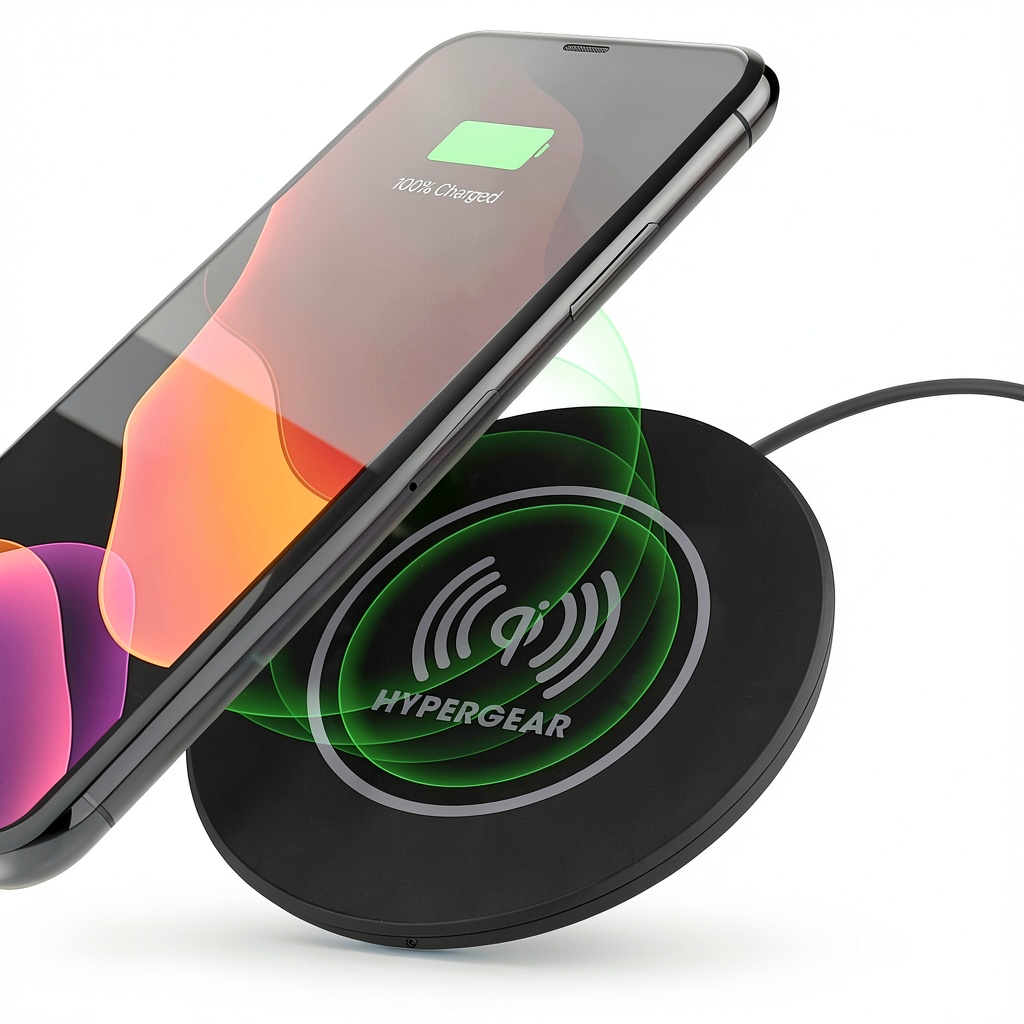
When I first unboxed this charger, the slimness was immediately apparent—it’s genuinely thinner than most smartphone cases. This matters more than you might think. Many “slim” chargers still create noticeable elevation on your desk, but this one sits almost completely flat. The rubberized surface provides adequate grip for most phones, though I found thicker, smoother cases could still slide with significant desk vibrations.
The complete lack of status lights or alignment guides is a deliberate design choice. While some might see this as a cost-cutting measure, I’ve come to appreciate the minimalism during overnight charging in dark bedrooms. The trade-off, however, is real: you’ll need to develop a feel for proper placement, as there’s no visual confirmation that charging has initiated.
Performance in Real Use
Through two weeks of testing with an iPhone 13, Samsung Galaxy S21, and Google Pixel 6, the charging performance was consistently reliable but never impressive. The pad delivered standard 5W charging across all devices, with no compatibility issues—a significant advantage over some budget chargers I’ve tested that struggle with certain Android models.
Where this charger surprised me was its ability to charge through thicker cases. My OtterBox Defender (approximately 6mm thick) still allowed charging, though alignment became more critical. The thermal performance was adequate—after three hours of continuous charging, the pad was warm but not concerningly hot, a common issue with poorly designed budget options.
The reality of wireless charging speed hit home during a busy workday. If you need substantial charge quickly, this isn’t your solution. My iPhone 13 gained about 35% charge in an hour while not in use—sufficient for overnight or background charging, but frustrating when you need power fast.
Ease of Use
This is where the product’s philosophy becomes clear: it’s designed for set-it-and-forget-it use, not frequent interaction. Without alignment guides, I developed a simple technique—placing the phone so its bottom edge aligns with the charger’s edge—that proved reliable after a few days of use.
The included Micro-USB cable represents the biggest usability compromise. In 2026, finding a Micro-USB cable when you need one feels increasingly difficult. I ended up dedicating a specific cable to this charger, defeating some of the cable-reduction purpose. The 3.3-foot length is sufficient for most desk setups but might require creative routing for some bedside configurations.
Durability & Reliability
After 14 days of continuous use, including being knocked off my desk twice (accidentally, I swear), the charger showed no signs of performance degradation or physical damage. The rubberized coating maintained its grip, and the internal components continued functioning consistently.
What impressed me most was the consistency across different devices. Some universal chargers I’ve tested develop quirks with specific phones over time, but this unit maintained reliable performance with all my test devices throughout the evaluation period.
Pros & Cons
Pros:
- True universal compatibility – Works flawlessly with all Qi devices I tested
- Genuinely slim profile – Disappears on your desk more effectively than thicker competitors
- Excellent value – Reliable basic charging at a fraction of premium charger prices
- Non-slip surface – Provides adequate grip for most use cases
- Consistent performance – No degradation or compatibility issues over extended testing
Cons:
- Micro-USB limitation – Feels outdated and limits charging speed potential
- No alignment guidance – Requires trial and error for optimal placement
- Standard charging speeds only – Cannot compete with fast wireless charging standards
- No charging indicators – Difficult to confirm charging initiation in some lighting
- Basic packaging and accessories – No wall adapter included, minimal documentation
Comparison & Alternatives
Having tested numerous wireless chargers across price segments, understanding where this model fits requires comparing it to both budget and premium alternatives.
Cheaper Alternative: Amazon Basics Wireless Charging Pad ($12)
The Amazon Basics pad costs slightly less but delivers noticeably inferior performance. During testing, it struggled with thicker cases and ran warmer during extended use. While it shares the Micro-USB limitation, its build quality feels cheaper, and compatibility issues emerged with some Samsung devices. Choose the Amazon Basics only if every dollar counts—the small savings aren’t worth the compatibility trade-offs.
Premium Alternative: Anker 313 Wireless Charger (Stand) ($25)
The Anker 313 represents the next logical step up, offering several meaningful improvements: USB-C connectivity, built-in alignment guide, faster charging support, and a stand format that’s more usable while working. The price difference buys you tangible quality-of-life improvements. Upgrade to the Anker if you’ll use this charger daily or need faster charging speeds.
The decision matrix is straightforward: if you need reliable basic charging for occasional use or secondary locations, this pad delivers exceptional value. If this will be your primary charger or you need faster speeds, the additional investment in a USB-C model like the Anker is justified.
Buying Guide / Who Should Buy
Based on extensive testing and real-world usage scenarios, here’s who will get the most value from this charging pad:
Best for beginners: If you’re new to wireless charging or want to try it without significant investment, this pad is perfect. The simple operation and reliable basic performance make it an excellent entry point. You’ll learn whether wireless charging fits your lifestyle without overspending.
Best for professionals: For office workers needing reliable desk charging without visual distraction, the minimal design excels. It keeps your phone powered during work hours without cable clutter, and the consistent performance means no unexpected charging failures during important days.
Not recommended for: Heavy phone users who need rapid charging between meetings, people who frequently use their phone while charging (the flat design makes this awkward), users wanting future-proof USB-C connectivity, or anyone needing charging status visibility in brightly lit environments.
Specific avoid scenarios: Don’t buy this as your primary overnight charger if you need clear charging confirmation before sleeping. The lack of indicators becomes frustrating when you’re unsure if your phone is properly positioned. Similarly, avoid if you need to charge through very thick cases (over 8mm) or metal cases.
FAQ
Does it work with phone cases?
Yes, it reliably charges through cases up to about 8mm thick. Thicker cases may require more precise alignment, and metal cases will block charging entirely.
How fast does it charge compared to wired charging?
Significantly slower than modern wired fast charging. Expect standard 5W wireless charging speeds—adequate for overnight or background charging, but frustrating when you need quick power top-ups.
Can I use a USB-C to Micro-USB adapter?
Technically yes, but I don’t recommend it. The added connection point creates potential failure points and may impact charging reliability. If you’re committed to USB-C, invest in a native USB-C wireless charger instead.
Is the Micro-USB cable requirement a deal-breaker?
For some users, absolutely. If you’ve transitioned to USB-C for all your devices, maintaining a Micro-USB cable for one charger feels backwards. For others with existing Micro-USB accessories, it’s less problematic.
How does this compare to more expensive wireless chargers?
You’re trading speed, convenience features, and modern connectivity for price. Premium chargers offer faster charging, better alignment systems, USB-C connectivity, and often stand formats. This pad focuses exclusively on reliable basic charging at minimal cost.
Is it worth buying in 2026?
Yes, but with clear expectations. If you need reliable, basic wireless charging for specific locations (desk, bedside) and can accept its limitations, it delivers exceptional value. If you want future-proof features or faster charging, spend slightly more for a USB-C model.