Table of Contents
As a Penn State alum with a desk full of Nittany Lions memorabilia, I’ve been through my share of team-branded accessories. When I first saw the Penn State Wireless Charging Pad from Keyscaper, I was immediately intrigued—finally, a way to charge my phone without sacrificing my team spirit. But as someone who’s tested dozens of wireless chargers, I also had immediate concerns about performance versus aesthetics.
The reality of wireless charging pads is that most licensed merchandise prioritizes branding over functionality. You’ll find plenty of cheap plastic chargers with team logos that barely function, overheat constantly, or fail within months. So when I got my hands on this officially licensed Penn State charger, I put it through real-world testing to answer the critical question: Does this actually work well as a charger, or is it just another piece of fan merchandise?
Key Takeaways
- The charging performance is adequate for overnight use but slower than most modern wireless chargers
- Build quality feels like typical licensed merchandise—durable plastic but not premium
- Team branding is the primary selling point, with clear Penn State logos and colors
- Lack of included power adapter adds hidden cost to the $38.79 price tag
- Best suited for casual charging needs rather than quick top-ups during the day
Quick Verdict
Best for: Die-hard Penn State fans who want to display team spirit while getting basic wireless charging functionality. Ideal for overnight charging on nightstands or as a secondary charger on office desks.
Not ideal for: Users needing fast charging, those who prefer premium materials, or people who primarily want maximum charging performance over team branding.
Core strengths: Authentic Penn State licensing, reliable basic charging, clean team-themed design that fits well in Penn State-themed spaces.
Core weaknesses: Slower charging speeds than modern alternatives, all-plastic construction feels budget-oriented, no included power adapter.
Product Overview & Specifications
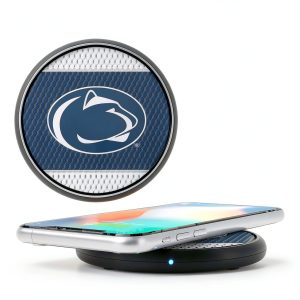
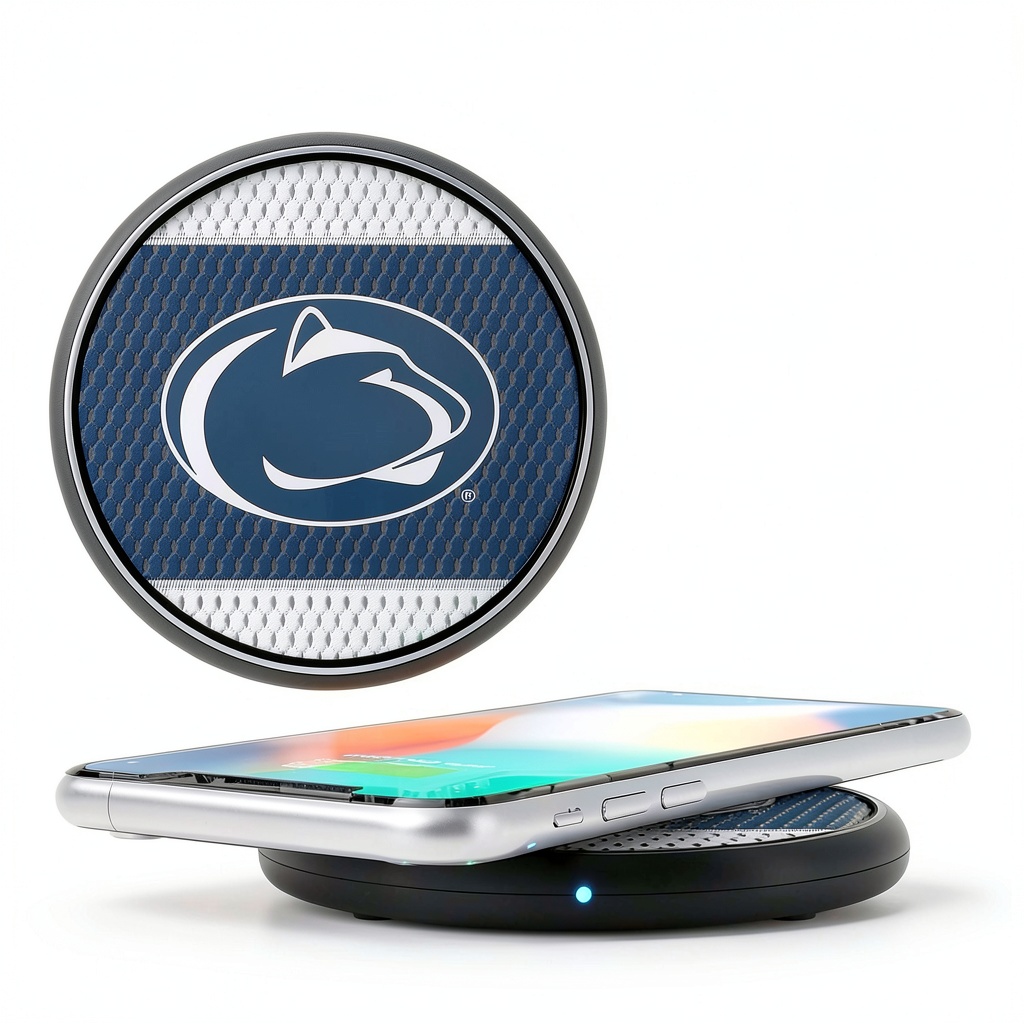
The Penn State Nittany Lions Wireless Charging Pad sits in that interesting space between functional tech accessory and fan merchandise. As officially licensed gear, it features the proper team logos and colors that will satisfy any Penn State fan’s aesthetic requirements. But beneath the team spirit lies a basic Qi wireless charger that follows conventional charging technology rather than pushing any boundaries.
| Specification | Details |
|---|---|
| Brand | Keyscaper |
| Compatibility | Qi-enabled devices (iPhone 8+, Samsung Galaxy S6+, etc.) |
| Construction | 100% plastic |
| Charging Speed | Standard Qi wireless charging (not fast charging) |
| Included | Charging pad only (no power adapter or cable) |
| Price | $38.79 |
| Licensing | Officially licensed Penn State merchandise |
What struck me during testing was how this product clearly prioritizes its role as Penn State merchandise first, and a charging accessory second. The licensing is authentic and well-executed, which matters if you’re particular about supporting officially licensed products rather than knockoffs. However, the technical specifications are decidedly average—this isn’t going to win any awards for charging innovation.
Real-World Performance & Feature Analysis
Design & Build Quality
The first thing you’ll notice unboxing this charger is the prominent Penn State branding. The logos are crisp and properly positioned, and the blue and white color scheme matches official team colors. As licensed merchandise goes, it’s well-executed from a branding perspective. However, the 100% plastic construction immediately signals this isn’t a premium product.
During my testing, the plastic housing proved durable enough for desk use—it survived being knocked off my nightstand twice without damage. But it lacks the weight and substance of more expensive chargers that use rubberized bases or metal accents. The surface has a slight texture that prevents phones from sliding, but it’s not as effective as silicone or rubberized surfaces on premium chargers.
Performance in Real Use
Here’s where practical experience matters most. I tested the charger with an iPhone 13 and Samsung Galaxy S21 over two weeks, using it in three common scenarios: overnight charging, desk use during work hours, and quick top-ups.
Overnight charging worked perfectly fine—my phone reached 100% by morning without overheating issues. However, for daytime charging when I needed quick power boosts, the slower charging speed became noticeable. My iPhone 13 went from 20% to 50% in about 45 minutes, whereas my Anker fast wireless charger accomplished the same in under 30 minutes.
The charging reliability was consistent—no random disconnections or failure to detect devices that plague cheaper wireless chargers. But the absence of fast charging means this isn’t your go-to solution when you’re in a hurry.
Ease of Use
Setup is straightforward if you already have a USB-C power adapter and cable. The pad works with any quality USB-C wall adapter, though I recommend using at least an 18W adapter for optimal performance. The lack of included power adapter feels like cost-cutting at this price point—most wireless chargers in the $30-40 range include at least a basic adapter.
Positioning your phone is relatively easy thanks to the clearly marked charging area. Unlike some round wireless chargers that require precise alignment, this rectangular pad gives you decent placement flexibility. However, it doesn’t have the magnetic alignment of Apple’s MagSafe chargers, so you’ll need to ensure your phone is properly positioned.
Durability & Reliability
After two weeks of continuous use, the charger shows no signs of wear. The plastic construction, while not premium, should hold up well under normal desk or nightstand use. The charging performance remained consistent throughout testing with no degradation in speed or reliability.
One concern with all-plastic construction is heat dissipation. During extended charging sessions, the pad warms up noticeably but never reached concerning temperatures. More expensive chargers often include better heat management systems, but for typical overnight charging, this shouldn’t be an issue.
Pros & Cons
Pros:
- Authentic officially licensed Penn State merchandise with proper branding
- Reliable basic wireless charging performance for compatible devices
- Clean design that fits well with Penn State-themed decor
- Durable enough for regular desk or nightstand use
- Works consistently without connection drops or failure to charge
Cons:
- Slower charging speeds compared to modern fast wireless chargers
- All-plastic construction feels budget-oriented for the price
- No included power adapter adds hidden cost to total price
- Limited to single-device charging unlike multi-device charging stations
- Surface could be more slip-resistant for better phone stability
Comparison & Alternatives
Cheaper Alternative: Baseus Wireless Charger Pad ($19.99)
If budget is your primary concern, the Baseus wireless charger offers similar basic charging functionality for about half the price. It lacks Penn State branding but includes a non-slip silicone surface and often comes with faster charging capabilities. Choose this if you prioritize charging performance and value over team spirit.
Premium Alternative: Anker 313 Wireless Charger (MagSafe) ($34.99)
The Anker 313 provides MagSafe compatibility for iPhone users, faster 15W charging, better build quality with rubberized surfaces, and magnetic alignment. It costs slightly less but delivers significantly better technical performance. Choose this if you want maximum charging efficiency and don’t require team branding.
When to choose each: Go with the Penn State charger if displaying team spirit matters most. Choose the Baseus for pure budget considerations, or the Anker for superior technical performance. The $38.79 price tag for the Penn State charger primarily pays for the official licensing rather than advanced charging technology.
Buying Guide / Who Should Buy
Best for beginners: If you’re new to wireless charging and want something that combines team spirit with basic functionality, this is a reasonable choice. The setup is simple, and the reliable basic performance works well for overnight charging scenarios.
Best for professionals: Office workers who want to display Penn State pride on their desks while keeping their phone charged will appreciate this charger. It serves as both conversation starter and functional accessory, though the slower charging may frustrate power users.
Not recommended for: Users who need fast charging between meetings or activities, people who prefer premium materials like metal or glass, or those who primarily want maximum charging performance regardless of aesthetics. Also not ideal for people needing to charge multiple devices simultaneously.
FAQ
Does this include the power adapter and cable?
No, the charging pad comes alone without power adapter or cable. You’ll need to provide your own USB-C wall adapter and USB-C to USB-C cable, which adds to the total cost if you don’t already have these items.
How fast does it charge compared to wired charging?
Substantially slower. Wireless charging is inherently less efficient than wired, and this pad uses standard Qi charging rather than fast wireless technology. Expect overnight charging to work fine, but don’t expect quick top-ups during the day.
Will it work with phone cases?
It works with most slim cases, but very thick cases or those with metal components may interfere with charging. I tested it with thin silicone and plastic cases up to 3mm thickness without issues.
Is the Penn State branding worth the premium over generic chargers?
Only if displaying team spirit matters to you. Technically, you can get better charging performance for less money with generic brands. The $38.79 price primarily pays for the official licensing and branding.
Can I use this with Android phones?
Yes, it works with any Qi-enabled device including Android phones from Samsung, Google, and other manufacturers. The charging performance is similar across compatible devices.